Check out our
FAQ
Here to help, always
Have questions about our treatments? You’re in the right place.
At Beauty Custom Club, we know booking a beauty or wellness treatment — whether it’s your first or fiftieth — can bring questions. That’s why we’ve created this space to answer the most common ones, so you feel confident and at ease before your visit.
Our FAQs cover everything from semi-permanent makeup (SPMU) to massage therapy, with tips on preparation, aftercare, and getting the best results.
Still have questions? Scroll down to our contact form — we’re always happy to help.
” La beauté commence au moment où vous décidez d’être vous-même. “
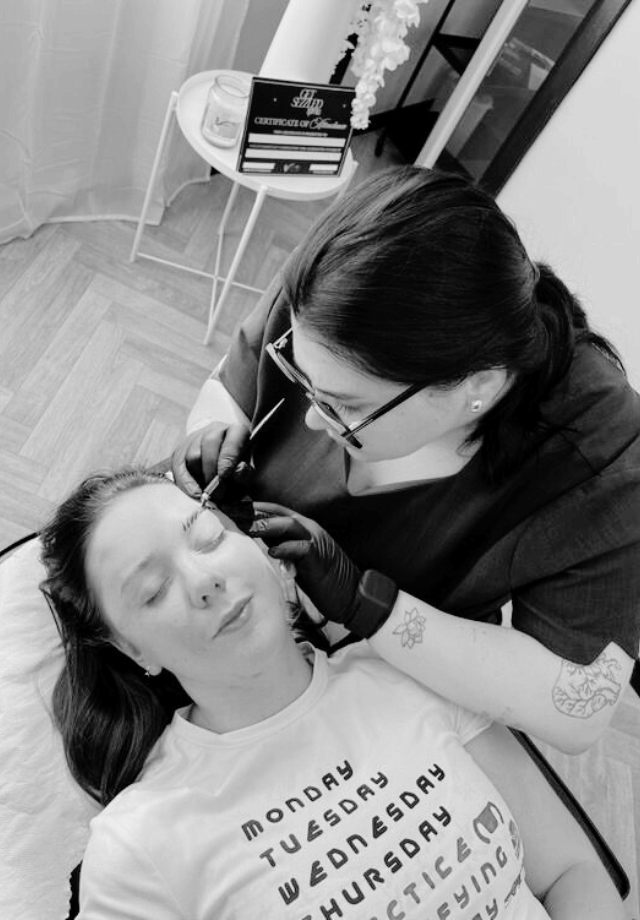
SPMU FAQ
SPMU, or Semi-Permanent Makeup, is a cosmetic tattooing technique that enhances facial features by implanting pigment into the skin. Common treatments include microblading (eyebrows), lip blush, and eyeliner tattooing.
Results typically last 1–3 years, depending on your skin type, lifestyle, and aftercare. Touch-ups are recommended every 12–18 months to maintain results.
Discomfort is minimal. A topical numbing cream is applied before and during the procedure to keep you as comfortable as possible.
Healing takes about 7–14 days, with full results visible after 4–6 weeks. You may experience some scabbing, flaking, and fading during this.
Avoid applying makeup to the treated area for at least 7–10 days to prevent infection and support healing.
Yes, when performed by a trained and licensed technician in a sterile environment. Always ask about credentials and hygiene practices.
You should avoid SPMU if you:
– Are pregnant or breastfeeding
– Have certain medical conditions (e.g., uncontrolled diabetes, blood disorders)
– Are on blood thinners or Accutane
– Have skin conditions in the treatment area (eczema, psoriasis)
– Are currently undergoing chemotherapy/radiotherapy, or have recently (last 2-4 weeks) undergone chemotherapy/radiotherapy
– Avoid alcohol, caffeine, and blood thinners for 24–48 hours before.
– Do not tan or get sunburned before your appointment.
– No Botox, peels, or facials 2 weeks before or after treatment
– Microblading uses a manual blade to create hair-like strokes.
– Powder/Ombre brows use a machine to create a soft, shaded effect.
– Combo brows blend both techniques for a natural but defined look.
Yes! A perfecting session is typically done 4–8 weeks after the initial procedure to refine shape and colour.
Most SPMU sessions last between 1.5 to 3 hours, depending on the treatment area and complexity.
Yes! We customize pigment shades to match your natural features and skin tone for a subtle, natural look. The colour may appear darker immediately after the procedure but will soften as it heals.
SPMU is considered semi-permanent and designed to fade over time. Removal options like laser treatment or saline removal are available but can be costly and require multiple sessions.
Avoid swimming, saunas, steam rooms, and heavy sweating for at least 7-10 days to prevent infection and pigment loss.
Some redness and swelling are normal. Apply recommended soothing ointments and avoid touching or scratching the area. Contact your technician if symptoms worsen or persist beyond a few days.
Yes, but oily skin can cause pigment to fade faster or blur, which might require more frequent touch-ups.
Yes, mild peeling or scabbing can occur during healing. Avoid picking or scratching to prevent scarring or pigment loss.
Follow your technician’s aftercare instructions carefully, including keeping the area clean and dry, avoiding makeup, and applying ointments as directed.
SPMU carries minor risks such as allergic reactions, infection, or uneven pigment. Choosing a skilled professional and following aftercare minimizes these risks.
Yes, SPMU can be used to camouflage scars, alopecia patches, or uneven pigmentation in certain cases.
Yes, in many cases, but it depends on the condition of the existing work. A consultation is recommended.
Massage therapy faq
We offer various massage styles including Deep Tissue, Relaxation Massage, and Swedish Massage, each designed to meet different needs.
Deep Tissue Massage:
This technique targets the deeper layers of muscle and connective tissue. It uses slower strokes and more intense pressure to relieve chronic muscle tension, knots, and injuries. Best for people with persistent pain or muscle tightness.
Relaxation Massage:
Also called a Swedish Massage in many places, it focuses on promoting general relaxation and reducing stress. It uses long, flowing strokes, gentle kneading, and light pressure to improve circulation and soothe the nervous system.
Swedish Massage:
Often used interchangeably with Relaxation Massage, Swedish Massage involves five basic strokes — effleurage, petrissage, friction, tapotement, and vibration — to promote overall well-being, improve blood flow, and ease muscle tension
Sessions typically last 30, 60, or 90 minutes, depending on your needs and preferences.
You should feel comfortable throughout. Deep Tissue massages may cause some discomfort as tight muscles are worked on, but it should never be painful. Always communicate your comfort level with your therapist.
It depends on your goals — for general wellness, once a month is common. For chronic pain or injuries, weekly or biweekly sessions may be recommended.
Yes! Therapeutic massages can aid recovery from injuries by increasing blood flow, reducing scar tissue, and loosening tight muscles. Always consult your healthcare provider if you have a serious injury.
You can undress to your comfort level. Your therapist will provide proper draping to ensure privacy and warmth at all times.
Prenatal massage is safe when performed by a certified prenatal massage therapist. Please inform us if you are pregnant.
Drink plenty of water, avoid strenuous activities, and rest to help your body absorb the benefits.
Scalp micropigmentation faq
Scalp Micropigmentation (SMP) is a non-surgical cosmetic procedure that uses tiny, layered pigment deposits to replicate the look of natural hair follicles on the scalp.
It’s commonly used to:
– Create the appearance of a fuller, thicker hairline
– Camouflage hair thinning or bald spots
– Conceal scars from hair transplants or injuries
– Give the look of a closely shaved head
The results are natural-looking, long-lasting, and low maintenance. SMP works for both men and women and is customized to match your natural hair colour and skin tone.
SMP is great for men and women experiencing hair thinning, baldness, receding hairlines, or hair loss from scars or medical conditions.
Yes! The pigment is carefully matched to your skin tone and hair color, creating very natural-looking results.
Most clients say it feels like mild discomfort and is very tolerable. Pain levels are much lower than traditional tattooing.
Results are long-lasting, typically several years. A touch-up may be needed over time to keep it looking fresh.
Most clients need 2–3 sessions, spaced a few weeks apart, to achieve the best results.
Minimal downtime. You may experience slight redness that usually fades within 1–2 days.
Absolutely. Hairline shape, density, and pigment color are fully customized to your goals.
Send a DM or book a consultation to see if SMP is right for you.
SMP may not be suitable for clients who:
– Are pregnant or breastfeeding
– Have active skin conditions on the scalp (eczema, psoriasis, dermatitis, open wounds, infections)
– Have uncontrolled diabetes
– Have bleeding disorders or are on blood-thinning medications (without medical clearance)
– Are undergoing chemotherapy or active cancer treatment
– Have a history of keloid scarring
– Have allergies to pigments or numbing agents
A consultation is required to determine eligibility.
SMP should be postponed or avoided if you have:
– Sunburn or recent excessive sun exposure
– Recent scalp surgery or hair transplant (must be fully healed)
– Severe acne or folliculitis on the scalp
– Autoimmune conditions affecting skin healing (medical clearance may be required)
– Recent use of Accutane (within the last 6–12 months)
SMP is generally safe when performed by a trained professional. Temporary side effects may include:
– Mild redness or irritation (usually subsides within 24–48 hours)
– Slight itching or tenderness
– Temporary darkening of pigment (lightens as it heals)
– Very rare risk of infection if aftercare instructions are not followed
Yes. When performed by a certified practitioner using sterile equipment and high-quality pigments, SMP is considered a low-risk, non-surgical procedure.
SMP can be performed on various areas of the scalp to improve the appearance of hair density and coverage, including:
– Receding hairline
– Crown / vertex
– Full scalp coverage
– Thinning areas
Scalp Micropigmentation works by replicating the look of natural hair follicles using tiny pigment impressions.
Because people with dark hair naturally have higher contrast between the hair follicle and scalp, SMP blends more seamlessly and creates a more realistic, fuller appearance.
Dark hair follicles appear more defined, which allows the pigment to:
– Match more easily to natural hair colour
– Create stronger visual density
– Produce a more natural shaved or filled-in look
For clients with lighter hair, SMP is still possible, but it often requires extra customization, softer pigment tones, and sometimes more sessions to achieve the same level of contrast.
During your consultation, pigment colour and density are carefully selected to ensure results look natural and suit your skin tone and hair colour.
Scalp Micropigmentation pricing is based on the size of the area being treated, the time required, and the level of detail needed.
Prices range from £200 – £700 per session, depending on the area we work on.
Full scalp treatments take approximately 5–6 hours per session and are typically priced around £700.
Smaller areas, such as the sides or crown, are quicker to treat and usually range between £200 – £300.
Each treatment plan is fully customized, and an exact price will be confirmed during your consultation based on your specific needs.